
Judge Grants Recall and Re-Sentencing Hearing for Santana High School Shooter Andy Williams Over Strong Objection by the DA’s Office
San Diego County District Attorney Summer Stephan said today that a Superior Court Judge has granted Santana High School Shooter Charles ‘Andy’ Williams’ request to recall his original sentence and allow him to be resentenced. The decision will result in the defendant being transferred to the juvenile court system and his immediate release from prison without any parole supervision or determination that such a move would not pose a risk to public safety. At the hearing, the judge heard strong legal arguments from the DA’s office against allowing a resentencing hearing for this killer. Prosecutors argued that 50 years-to-life does not constitute the functional equivalent of life without the possibility of parole. The judge, acknowledging a split of authority in Court of Appeal cases on the issue before this court, chose to follow the decisions by our appellate court and grant the request of inmate Williams to recall his sentence.
The DA’s office will immediately file an appeal to the Fourth District Court of Appeal, Division One, and again try to stop Willliams’ release.
“This defendant carried out a calculated, cold-blooded attack during which he executed two young students and shot 11 other students and two school officials, forever traumatizing a community,” said DA Stephan. “As prosecutors, our duty is to ensure justice for victims and protect public safety, and the defendant’s cruel actions in this case continue to warrant the 50-years-to-life sentence that was imposed. We respectfully disagree with the Court’s decision and will continue our legal fight in the Court of Appeal and the Supreme Court if need be. Prosecutors mounted a formidable legal position, led by Deputy District Attorney Nicole Roth, arguing that 50 years-to-life is not the functional equivalent of life without the possibility of parole on its own, and in addition, argued that the law allows the defendant an opportunity for youthful parole and elder parole in the future. In fact, Williams already had a youthful parole hearing and was found unsuitable for release. These same opportunities were not given to the two victims who were executed. They won’t be released from the grave and returned to their families. At some point our laws must balance the rights of defendants, the rights of victims, and the rights of the community to be safe. Many school shooters are young, so what message does our legislature want to give them to deter them from carrying out horrific shootings?”
Williams’ case was transferred to juvenile court for a disposition hearing. At a disposition hearing, due to Williams’ age when he murdered two students and attempted to murder 13 others, his adult convictions will be re-designated as juvenile ‘true findings’ and he cannot be ordered to serve more custody time. Williams will be ordered released from prison and may be placed on up to two years of juvenile probation. The court will not have an opportunity under existing law to weigh factors in aggravation or mitigation in making the disposition order, nor will the court make a finding that the order is not a risk to public safety.
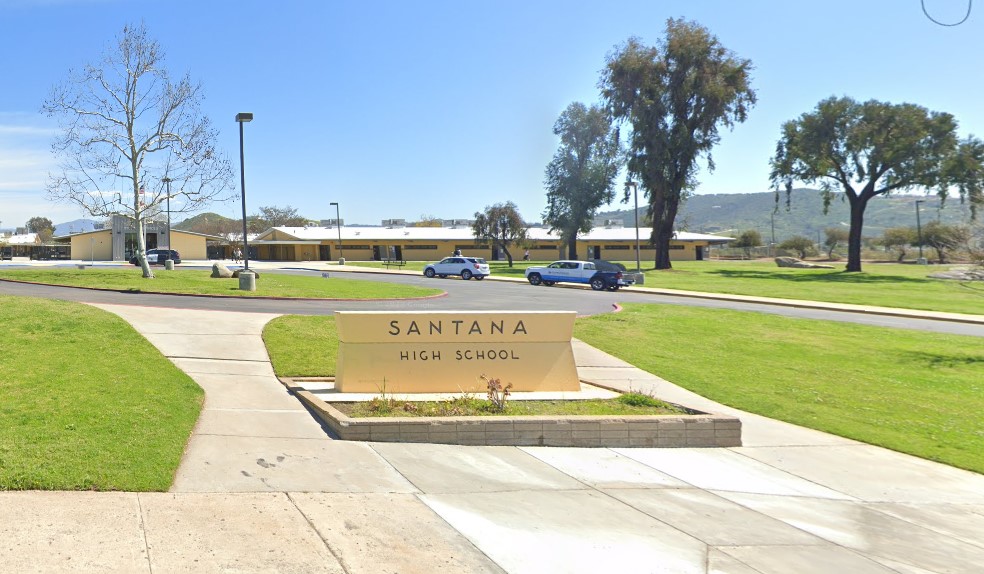
On March 5, 2001, a tragic school shooting occurred at Santana High School in Santee. Williams, who was 15 years old at the time, opened fire on campus, killing two students—14-year-old Bryan Zuckor and 17-year-old Randy Gordon—and wounding 13 others, including 11 students and two staff members.
The Santana High School shooting incident began around 9:20 a.m. when Williams entered a boys’ bathroom with a .22-caliber revolver taken from his father’s locked gun cabinet. He shot a student inside the restroom, then emerged to fire at others in the hallway and school’s quad area. Witnesses described him as calm and methodical, returning to the bathroom to reload multiple times before continuing to fire at students and staff in the hallway. He was ultimately apprehended by police without resistance.
In August 2002, Williams pleaded guilty to all charges and was sentenced as an adult to 50 years-to-life in prison. He is currently incarcerated at the California Institution for Men in Chino, California and became eligible for parole in September 2024. His first parole request was denied, with the Parole Board citing him as a continued risk to public safety. In making its decision, the Board said it is unclear if Williams understands why he committed “this horrendous act of violence.”
In 2011, a change in the law allowed judge to recall or reduce adult sentences in the “interests of justice” and created pathways for juvenile offenders with life without parole to seek recall of their sentence and resentencing. In 2022, the Court of Appeal decision in People v. Heard extended the resentencing petition process to juvenile offenders serving the ’functional equivalent’ of life without the possibility of parole. On March 6 of this year, Williams’ attorney filed a petition for recall of sentence and resentencing with the court, setting the legal process in motion for a judge to consider his request.
The DA’s Office has notified dozens of victims who were impacted by the shooting about the defendant’s request for re-sentencing, complying with its responsibilities under Marsy’s Law.
The Santana High School shooting remains one of the most painful school shootings in San Diego County history.

