Defendant Arraigned for Cold Case Murder that Occurred More than Half a Century Ago
San Diego County District Attorney Summer Stephan said today that a killer who murdered a man in his North Park home more than 50 years ago has been extradited from the Midwest and today was arraigned on a charge of murder. 71-year-old Johnnie Salisbury was arraigned in San Diego Superior Court after being arrested in Indiana last month and extradited to San Diego to be held accountable for his crime.
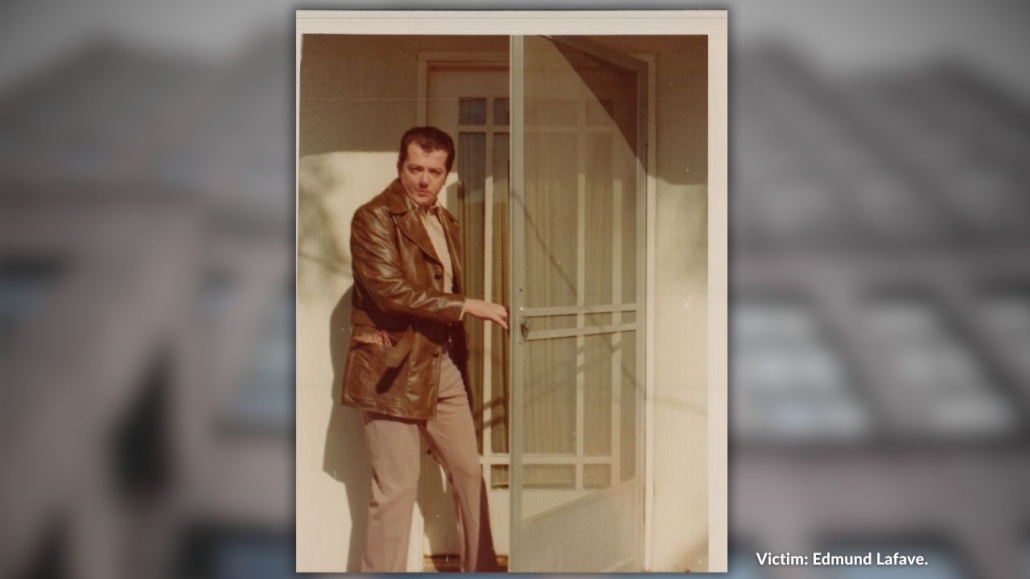
In 1975, Salisbury brutally beat and stabbed 34-year-old Edmund LaFave in his own home on Suncrest avenue. LaFave’s lifeless body was found in a pool of blood in his bedroom at his residence in the 2900 block of Suncrest Drive on February 25, 1975.
“Sometimes we have to wait decades to deliver justice on behalf of a murder victim, but the key is to never give up on justice,” said DA Stephan. “This defendant got away with murder for more than half a century, but thanks to the dedication of law enforcement is now being held to account for his brutal crime. This is an outstanding example of how modern science, combined with a commitment to solving cold case murders, can lead to a just result. I want to thank the entire team who worked on this case and never gave up searching for this killer.”
Various cold case investigators reviewed the case over the years but were not able to identify a suspect. Despite the exhaustive investigation at the onset of the case, the investigation eventually went cold. However, the District Attorney’s grant-funded Cold Homicide and Research Genealogy Effort (CHARGE) working with our law enforcement partners at the San Diego Police Department were able to provide investigators with the information they needed to solve the case.
The DA credited DA Cold Case Unit lead prosecutor Chris Lindberg, genealogist Laura Tanney, as well as District Attorney Investigators Tony Johnson, Ryan Gremillion, Lisa Williams and SDPD detectives for their outstanding work on the case. Experts at the SDPD Crime Lab were then able to match the defendant’s fingerprints to the crime scene, including prints found on a bloody clothes iron used to beat the victim.
CHARGE is funded by the Prosecuting Cold Cases Using DNA grant from the US DOJ. Providing $533,000 over three years, this grant enables forensic investigative genetic genealogy work to solve unsolved homicides. This is a competitive grant that is only awarded to a few agencies nationwide each year. This is the second, three-year grant the District Attorney’s Office has been awarded to fund its groundbreaking CHARGE program.
Forensic investigative genetic genealogy is a powerful investigative tool that helps law enforcement solve cold case murders by using DNA evidence to identify suspects through their family connections and public records rather than existing criminal databases. Investigators use DNA from crime scenes and create a genetic profile that can be compared to opt-in public genealogy databases to locate distant relatives of an unknown suspect.
Deputy District Attorney Chris Lindberg, who leads the DA’s Cold Case Homicide Unit, is prosecuting this case.

