
DA Launches Elder Scam Prevention Campaign
San Diego County District Attorney Summer Stephan released disturbing numbers today related to the amount money seniors lost in San Diego County from various online and phone scams targeting the elderly. During a one-year period, seniors in the county were scammed out of more than $130 million according to San Diego County’s Elder Justice Task Force (EJTF).
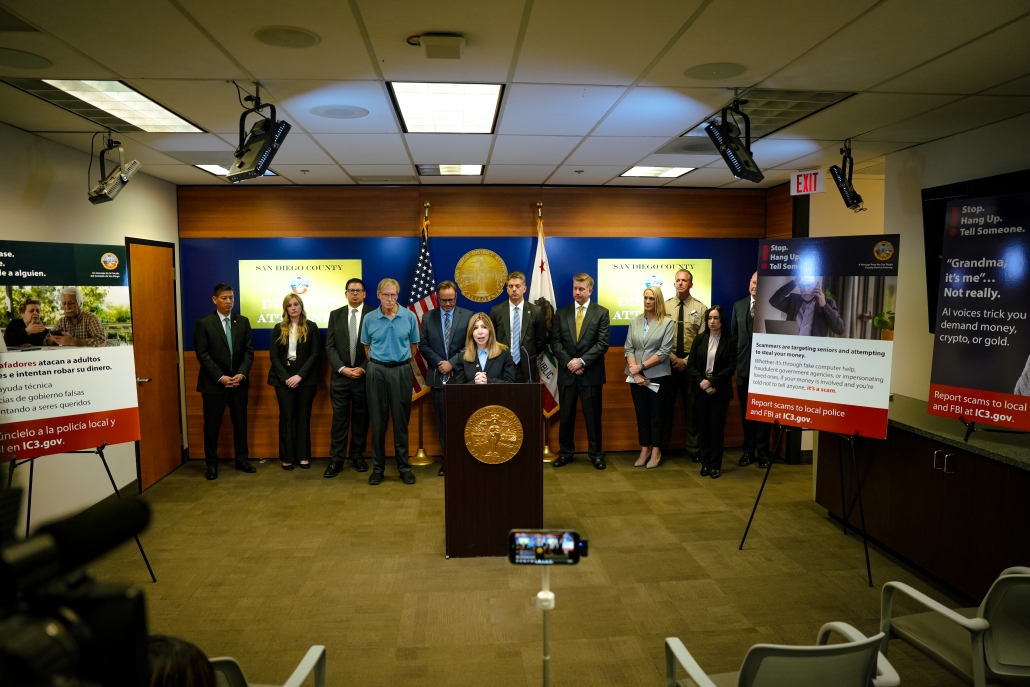
Citing the devastating losses, DA Stephan was joined by law enforcement partners at a news conference today to also share details of a large-scale elder scam prevention campaign that has garnered nearly 26 million advertising impressions since mid-September. The campaign began in September and will continue through the end of the year. Its goal is to educate seniors, their loved ones, caregivers, and the public about the types of scams that are currently most prevalent. The outreach is being led by the DA’s Office and is running on outdoor media, multiple digital platforms, print media, and radio outlets.
“We’ve had enough of criminals aggressively targeting some of the most vulnerable people in San Diego County and, in some cases, bilking them out of their life savings,” DA Stephan said. “We want to educate senior citizens and their families about how to recognize scams and what specific actions they should take if they suspect they are being targeted. At the same time, our collaborative work through the Elder Justice Task Force is reaping rewards in both prosecutions and restitution for victims who previously were devastated by their losses.”
WATCH THE NEWS CONFERENCE, HERE.
The county’s Elder Justice Task Force was formed in 2020 and for the first time, combined investigative resources and critical data sharing from federal, state, and local authorities. Since its inception, the EJTF has tracked or identified more than 4,600 victims and over $325 million in losses in San Diego County. The figures are likely much higher, however, since elder fraud is chronically underreported due to shame and embarrassment. In a game-changing effort, the EJTF combines the efforts of the FBI, U.S. Attorney’s Office, DA’s Office, Law Enforcement Coordination Center, County’s Aging and Independence Services, and local law enforcement to focus solely on the financial exploitation of older adults.
“Elder justice has long been a priority for the FBI and the San Diego Division is passionate about protecting this vulnerable population,” said Special Agent in Charge Mark Dargis of the FBI San Diego Field Office. “Ensuring seniors are safe is part of our mission and we take this violation seriously. We aggressively investigate those who seek to destroy the financial livelihood of our elder community and are committed to holding scammers accountable for their crimes to help restore justice to their victims.”
The Elder Justice Task Force investigates cases, prosecutes criminals, and seizes and recovers lost funds whenever possible. Since October of 2023, the Task Force has identified dozens of suspects who have been investigated by EJTF or are still pending investigation and has filed cases on over 70 defendants in state and federal court. Total losses for San Diego-based victims for all EJTF cases currently being investigated is $4.5 million. The District Attorney’s Office has recovered over $274,000 in victim restitution related to 10 of its prosecutions, money that went directly back to victims. Additionally, the EJTF has recovered more than $16 million of victim funds through federal seizure warrants, bank-to-bank coordination, and active loss prevention measures.
“Scammers who target seniors don’t just steal money — they steal their dignity and security,” said U.S. Attorney Adam Gordon. “When seniors are defrauded, they often lose the financial ability to live their lives on their terms. Early reporting makes all the difference. It has already allowed us to interrupt millions of dollars in scams and return money to victims before it’s gone. We urge anyone who suspects they’ve been targeted to report it immediately. Together, we can stop these fraudsters and give our seniors the peace of mind and financial freedom they have earned.”
Despite the Task Force’s successes, the amount of loss continues to increase year-to-year, leading the DA to create its new outreach campaign to reduce victimization of the county’s older residents. The DA’s Elder Scam Prevention campaign includes a comprehensive media strategy and is running through December 31. It is structured to provide broad awareness, multilingual coverage, and consistent reinforcement during the holiday season when scams are most active.
The campaign’s strategy balances mass reach for visibility with targeted placements for cultural and community relevance. By aligning traditional media with digital channels, it is ensuring that both seniors and their families are reached multiple times in multiple formats, increasing retention of the message.
Two months into the campaign, the combined media efforts have already generated more than 25.9 million impressions and is expected to generate over 43 million impressions and reach approximately 3.5 million unique individuals across San Diego County. This wide reach ensures that seniors, caregivers, and families receive repeated exposure to the prevention message in English, Spanish, Tagalog, and Vietnamese through a combination of traditional, digital, and community-based media channels.
Scams against older adults have grown more sophisticated, with tactics ranging from government impersonation to AI-generated voices mimicking family members. The campaign is anchored by the message “Stop. Hang Up. Tell Someone.” This simple, repeatable call-to-action provides clarity and reduces hesitation when a senior or caregiver encounters a suspicious request.
The Federal Trade Commission warned that scams targeting older adults have skyrocketed in the last four years. Reports of adults 60 and older losing $10,000 or more to impersonation scams have increased more than four-fold since 2020. Even more alarming: combined losses of over $100,000 per victim jumped eight times higher, from $55 million in 2020 to $445 million in 2024.
The DA’s outreach campaign notes that scams almost always follow the same playbook: a call, text, or pop-up warning about a fake “urgent” problem. The scammer—pretending to be from a government agency, bank, or major company—pressures victims into moving money to “protect” it. In reality, they’re tricking people into handing over their cash.
The scams often come in three common forms:
- “Someone is using your accounts.” They pose as your bank or PayPal, claiming they spotted suspicious activity or unauthorized transactions.
- “Your information is tied to a crime.” They impersonate law enforcement, warning that your Social Security number is linked to drug trafficking or money laundering.
- “Your computer has been hacked.” A fake security alert—appearing to be from Microsoft or Apple—directs you to call a number where scammers claim your accounts are compromised.
Once hooked, victims are told to transfer funds, deposit cash into Bitcoin ATMs, or even hand over money or gold to couriers. Different stories—same goal: to steal your money.
How to protect yourself:
- Never move money to “keep it safe.” No legitimate agency or company will ever tell you to do this.
- Verify independently. Hang up and call back using a number you know is real—never the one they give you.
- Stop the call before it starts. Use call-blocking tools to reduce scam attempts.
More information about the campaign and examples of ads can be found on the DA’s website here.

