
Tag Archive for: San Diego County District Attorney

DA Calls on Legislature to Fix the Mental Health Diversion System by Supporting Assembly Bill 46

San Diego County District Attorney Summer Stephan is joining the California District Attorneys Association in their statewide call for the California Legislature to pass common sense mental health diversion (MHD) legislation, Assembly Bill 46. This legislation is sponsored by the Sacramento County District Attorney’s Office, and co-sponsored by many district attorneys’ offices across the state, including the San Diego County District Attorney’s Office. The bill closes legal loopholes in California’s mental health diversion law by restoring judicial discretion and ensuring the program provides treatment while protecting community safety.

Across California, reports have shown tragic cases in which dangerous individuals were granted mental health diversion only to commit violent crimes later – including murder, attempted murder, domestic violence and more. The following are three case examples in San Diego County, where the defendants should not have been in a position to victimize individuals but were on mental health diversion and then committed violent acts:

  • Downtown San Diego –Grant Parker, 34, stabbed and killed a victim outside of a hotel in downtown San Diego while on mental health diversion for threatening to kill his mother with a knife, carjacking and attacking a cellmate. The defendant was later involved in a self-inflicted hanging incident.
  • La Jolla and Bay Park -Ty Nadelen, 20, committed a series of hot prowl residential burglaries in La Jolla using stolen vehicles and was granted mental health diversion. While on mental health diversion, he attacked his grandmother with a hammer in Bay Park.
  • Vista and North Park – Priscilla Loza, 46,was on two grants of mental health diversion for carjacking in Vista and vehicle theft when she attacked a 70-year-old man in a vehicle with a wooden board in North Park.

Mental health diversion, created under Penal Code §1001.36, was designed to help individuals suffering from mental illness receive treatment instead of incarceration. However, recent court rulings and statutory limitations have significantly restricted judges’ ability to deny diversion – even in serious and violent cases – leaving courts with limited authority to evaluate whether diversion is truly appropriate.

“Mental health diversion was created to provide treatment for individuals whose crimes are driven by mental illness, but it was never intended to put victims and communities at risk,” said San Diego County District Attorney Summer Stephan. “Unfortunately, gaps in the current law have removed the ability of judges to use their discretion in cases where diversion is clearly not appropriate. Assembly Bill 46 restores common-sense safeguards so courts can ensure that treatment is provided to those who truly need it, while protecting public safety and preventing dangerous outcomes.”

Under current law, once a defendant meets certain statutory criteria, judges have very limited discretion to deny diversion. Courts have even been forced to approve diversion in cases where no clear treatment plan exists, community safety is at risk, or where defendants have failed prior treatment effortsdue to how the statute is written and interpreted by appellate courts.

Further, once a defendant completes Mental Health Diversion, the crime is removed from the defendant’s criminal history, removing accountability for dangerous crimes as if the crime was never committed. This puts victims, law enforcement and communities at risk if the program is not implemented properly.

AB 46 addresses these concerns by allowing courts to consider whether a defendant poses a substantial and undue risk to the physical safety of another person and whether the proposed treatment plan is clinically appropriate to address the mental health condition that contributed to the crime.

AB 46 will be heard in the Senate Public Safety Committee on March 17. Members of the public can watch the hearing live at 8:30 a.m. at: https://spsf.senate.ca.gov/committeehome

Read the CDAA letter of support here. For more information about the mental health diversion loophole visit www.placer.ca.gov/MHD.


Three Gang Members Sentenced to Life Without Parole for Multiple Murders

San Diego County District Attorney Summer Stephan announced today that the three gang members involved in multiple shootings and killings have been sentenced to life without parole for the murders of three rival gang members.

Defendants Ethan Apan, 33, Kristian Apan, 32, and Ismael Betancourt, 25, were convicted last May after an 11-week jury trial in which jurors found them guilty of multiple counts of murder, conspiracy to commit murder, attempted murder, shooting at an occupied vehicle, assault by means likely to cause great bodily injury and several other felony counts.

The sentencing breakdown is:

  • Ethan Apan was sentenced to two terms of life without the possibility of parole plus a term of 132 years-to-life in state prison
  • Kristian Apan was sentenced to one term of life without the possibility of parole plus a term of 107 years-to-life in state prison
  • Betancourt was sentenced to two terms of life without the possibility of parole plus a term of 139 years-to-life in state prison

“Today sentencing brings to a close the gang warfare the plagued a small South Bay city with murders, shootings and retaliation,” DA Stephan said. “I am grateful to our prosecution team, Robert Eacret and Abrey Zora,” who expertly navigated the complicated underworld of gang activity to bring justice for these senseless killings.”

During their National City shooting rampage in 2019 and 2020, the trio killed Joaquin Ruiz, Marco Magana, and Juan Galvan, and severely injured Julio Martull, James Mullens, and Adan Duke. The initial killing of Ruiz was in retaliation for a rival killing a week prior. But the hunt down set off a wave of violence that included the three defendants routinely driving into rival gang territory to commit shootings, often mistakenly shooting innocent bystanders.

After a joint investigation between four San Diego Police Department Homicide Teams, the National City Police Department, and the District Attorney’s Office’s Gangs Unit, Ethan Apan, Kristian Apan, Ismael Betancourt, and six fellow gang members were arrested for their involvement and prosecuted for this string of shootings.

Prior to the trial, several co-defendants pleaded guilty and were sentenced for their involvement in the shootings.

  • Jorge Sanchez, 23 was sentenced to 105 years-to-life in state prison
  • John Anthony Orozco, 32, was sentenced to 38 years in state prison
  • Raymond Sandoval, 36, was sentenced to 20 years in state prison
  • Daisy Diaz, 28, was sentenced to 12 years in state prison

The District Attorney’s Gangs Division prosecutes complex murder cases and other serious crimes perpetrated by violent gang members who terrorize neighborhoods. These cases are handled by one prosecutor from beginning to end – also called vertical prosecution.

Deputy District Attorneys Robert Eacret and Abrey Zora prosecuted this case.


DA Weekly News with DA Summer Stephan 02-26-26: Our Consumer Protection Division Gets Results!

In this week’s DA News, San Diego County District Attorney Summer Stephan highlights the important work of the Consumer Protection Unit — the highly skilled team dedicated to safeguarding our community from fraud, deceptive business practices, and financial exploitation. The Consumer Protection Division is made up of experienced prosecutors, investigators, forensic accountants, and professional staff who specialize in complex civil and criminal enforcement actions. These experts handle cases involving unfair competition, false advertising, environmental violations, price gouging, scams targeting seniors, and large-scale corporate misconduct.

DA Stephan Receives Scripps President’s Award for Efforts to Help Reduce Hospital Violence

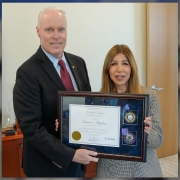
Scripps Health President and CEO Chris Van Gorder today presented San Diego County District Attorney Summer Stephan with the Scripps President’s Award for her leadership and partnership in efforts to help reduce crimes involving workplace violence against hospital workers across the region.

The award is the nonprofit health system’s highest honor for distinguished service to patients, physicians and staff at Scripps and to the broader community. DA Stephan has played a pivotal role in the growth of the San Diego Hospital Workforce Violence Task Force and in prosecuting criminal cases that have come forward since the group began in mid-2023.

“We are deeply grateful to DA Stephan for championing the important work of our regional Hospital Workforce Violence Task Force,” Van Gorder said. “Her leadership is helping us continually improve the way we protect and bring justice for frontline health care workers all across San Diego County.”

A former police officer and a retired reserve assistant sheriff, Van Gorder initiated the San Diego Hospital Workforce Violence Task Force as violent incidents in Scripps’ hospitals grew more common. With strong support from DA Stephan, the group has gradually grown to include leaders from various hospitals and health systems from throughout San Diego County, the DA’s Office, San Diego City Attorney’s office, San Diego County Sheriff’s Office, various regional police departments and others. The DA’s Office has put in place a special unit to handle hospital violence cases.

“It is a tremendous honor to receive the Scripps President’s Award and to stand alongside President Chris Van Gorder and our hospital partners in sending a clear message that violence against health care workers will not be tolerated,” said DA Stephan. “Our nation and region have seen an alarming rise in violence against doctors, nurses and health workers who have devoted their lives to serving others. In San Diego County, we took action to protect these selfless health professionals through the Hospital Workforce Violence Task Force, and creating a specialized team within the DA’s Office to effectively prosecute crimes committed against health workers.

“Our message is clear – You don’t get to threaten, spit on, beat, or stab the devoted hospital staff without facing justice,” DA Stephan said. “Justice in the over 100 cases we’ve prosecuted often includes addressing the root causes of the violence through court ordered mental health and substance abuse treatment. This recognition reflects the extraordinary work of our District Attorney’s Office team – especially Deputy District Attorneys Jessica Coto and Jessica Sutterley, and District Attorney Investigator Donte Kendricks, whose leadership and dedication on the Hospital Workforce Violence Task Force have strengthened protections for frontline medical professionals and helped ensure accountability for those who harm them.”


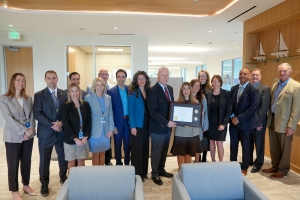
Group photo of the Scripps Health President's Award presented to DA Summer Stephan.

Group photo of the Scripps Health President’s Award presented to DA Summer Stephan.

The DA’s Office has prosecuted a combined 125 cases of hospital-related violence across the region since July 2023, when it started tracking such data. This includes 88 felonies countywide and 37 misdemeanors outside of the city of San Diego. (The City Attorney’s Office prosecutes misdemeanor cases within the city of San Diego.) These prosecutions have resulted in just consequences.

Moving forward, the DA’s Office plans to report expanded statistics on how many cases occur in specific medical facilities, as well as the type of criminal charges seen most frequently.

The task force, which meets every other month, has taken several steps to help improve communication and mutual understanding of workplace violence among regional hospitals, law enforcement agencies and prosecutors’ offices. For example, the group has established liaisons between hospitals and law enforcement agencies; arranged rounding tours through hospitals by law enforcement; and improved training for both hospital staff and law enforcement officers.

Scripps has worked closely with the DA’s Office to develop an online resource to guide Scripps staff through the prosecution process and has created other educational materials on the health system’s internal employee website. Scripps also has trained its staff to help avoid injuries and de-escalate potentially violent situations; incorporated artificial intelligence into existing video surveillance cameras to identify and respond to suspicious activity; integrated hospital security officers more closely into patient care teams; and deployed metal detectors outside of some facilities.

These internal efforts at Scripps, combined with its ongoing collaboration with the task force, have yielded positive results. After the first year that the task force was in place, Scripps achieved a 31% reduction in workplace violence injuries at its five hospital campuses, compared to the previous year. And from the start of the task force through the end of 2025, Scripps has achieved a 21% reduction in workplace violence injuries.

Scripps also advocated for Assembly Bill 977, a state law implemented in 2025 that increases jail time and financial penalties for people who assault emergency department workers. And Scripps supported Senate Bill 19, which was signed by California Gov. Gavin Newsom in 2025 and allows prosecution for threats made against medical facilities, schools, houses of worship and other locations.

Health care workers account for 73% of all nonfatal workplace violence victims and are five times more likely to experience workplace violence than are other workers, according to the U.S. Bureau of Labor Statistics.


ABOUT SCRIPPS HEALTH 

Founded in 1924 by philanthropist Ellen Browning Scripps, Scripps Health is a nonprofit integrated health care delivery system based in San Diego, Calif. Scripps treats more than 600,000 patients annually through the dedication of more than 3,500 affiliated physicians and nearly 18,000 employees among its five acute-care hospital campuses, more than 70 outpatient and specialty locations, and hundreds of affiliated physician offices throughout the region.


Recognized as a leader in disease and injury prevention, diagnosis and treatment, Scripps is also at the forefront of clinical research and is the only health system in the region with two level 1 trauma centers. With highly respected graduate medical education programs at all five hospital campuses, Scripps is a longstanding member of the Association of American Medical Colleges. Scripps has been ranked seven times as one of the nation’s best health care systems by Premier. Its hospitals are consistently ranked by U.S. News & World Report among the nation’s best, and Scripps is recognized by the Advisory Board, Fortune and Working Mother magazine as one of the best places in the nation to work. More information can be found at www.scripps.org.


ABOUT THE SAN DIEGO COUNTY DISTRICT ATTORNEY’S OFFICE

The San Diego County DA’s Office prosecutes all felony crimes in the county and misdemeanor crimes committed outside the City of San Diego. The office files about 40,000 criminal cases a year and balances prosecution with numerous crime prevention programs. District Attorney Summer Stephan leads the office of more than 1,000 dedicated employees who pursue fair and equal justice, and support victims daily across San Diego County. You can learn more at SanDiegoDA.gov.

Point Loma Man Sentenced to Life Without Parole for Executing Sister and Nephew, and Shooting his Mother

San Diego County District Attorney Summer Stephan said today that a 61-year-old man who killed his sister and nephew and seriously injured his then 86-year-old mother in an August 2024 family dispute, has been sentenced to two terms of life without parole plus 82 years in prison.

William Bushey was convicted by a jury in January of two counts of first-degree murder, with a use of a firearm allegation and the special circumstances for multiple homicides. He was also convicted of premeditated attempted murder and elder abuse with a firearm. In August 2024, Bushey shot and killed his sister, Laurie Robinson, 61, and her son, Brett Robinson, 33, and seriously wounded his mother, June Bushey, who survived but sustained critical injuries during the attack.

“Family violence shatters lives,” DA Stephan said. “When tragedy strikes within the home, the effects are devastating and reverberate far beyond the immediate victims. Our hearts are with the loved ones left behind, and we remain committed to holding violent offenders accountable for their actions.”

The case underscored the profound harm caused when domestic conflicts escalate into violence.

During the trial, Deputy District Attorney Scott Pirrello presented evidence showing that the defendant found himself on the verge of being kicked out of the family home for his poor behavior and he blamed his sister and mother for it. This tension within the family ultimately erupted into the fatal shootings.

Bushey lived with his elderly mother without contributing to the household and interacted very little with family members for over a decade in the family’s Point Loma home. He became upset when his sister moved into the home.

Over the course of nine days, Bushey’s agitated and aggressive behavior became so concerning that police were called to the house twice for disturbances, although none of the reported acts rose to the level of criminal conduct. By the day of the shootings, the family was on the verge of beginning the eviction process for Bushey and had ordered a surveillance system to be installed in the home. The internet system that was based in Bushey’s bedroom was relocated to another area of the home, upsetting him even further.

Bushey confronted his family about the Wi-Fi being turned off and then went into his bedroom and retrieved a shotgun that he had purchased in 2012 but had kept secret. He loaded the shotgun to maximum capacity and armed himself with additional shells and went looking for his family. He fired six rounds from the shotgun as he pursued his mother and sister who fled toward the back patio.  Bushey’s actions resulted in the deaths of his sister and nephew and caused catastrophic injuries to his mother who lost most of her right hand and suffered a “through and through” wound to her left upper abdomen, missing her heart by mere centimeters.

“This defendant was savage and ruthless in the way he hunted down his own family,” DA Stephan said. “I hope today’s sentence brings a measure of justice to the family of the victims and the community at large. I’m proud of the dedication and excellence that Deputy District Attorney Scott Pirrello and the DA team brought to this complex case.”

Preventing and prosecuting domestic violence and elder abuse and supporting victims through the tumultuous criminal justice process is a cornerstone of the work done by the District Attorney’s Offices. Thousands of crime victims are served through the DA’s two Family Justice Centers in San Marcos and National City, where they can obtain comprehensive services for victims of domestic violence, elder abuse, sexual assault and other forms of family violence. The office coordinates training for professionals across the county to recognize domestic violence warning signs, partners with community organizations to expand culturally sensitive support services and participates in public awareness and outreach efforts such as Domestic Violence Awareness Month in October.

For more information about available services, visit: https://ospsandiegocounty.gov/

DA Weekly News with DA Summer Stephan 02-19-26: Ex-Convict Charged with Misusing Public Funds

In this week’s DA news, DA Summer Stephan discusses the felony charges against a former nonprofit executive accused of misappropriating more than $130,000 in County opioid settlement funds. The case highlights the importance of transparency, oversight, and protecting taxpayer dollars. If you suspect misuse of public funds, you can report concerns to the DA’s Public Integrity Unit through the San Diego County District Attorney’s Office website. The District Attorney’s Public Integrity Unit investigates and prosecutes cases involving elected or appointed public officials, government employees committing crimes on the job, misuse of public funds or resources, fraud on the court and attorney misconduct. County employees or the public can submit a complaint on our website: https://www.sdcda.org/preventing/public-integrity/ or by emailing DA Public Integrity Unit at SDDAPublicIntegrity@sandiegoda.gov.

Ex-Convict with Record of Embezzlement Charged with Misappropriation of Public Money for Using County Consumer Opioid Settlement Grant Funds for Plastic Surgery, Vacations, and Personal Expenses

San Diego County District Attorney Summer Stephan announced charges today against a woman who was previously convicted of stealing over $500,000 from her employer. Her latest scheme involved bilking San Diego County out of more than $130,000 to fund her lavish lifestyle including two cosmetic plastic surgeries, luxury vacations, SDG&E bills for her personal homes, home improvement, and martial arts training. [WATCH THE NEWS CONFERENCE HERE]

Amy J. Knox, 45, has been charged with three felony counts of misappropriating public money and three felony counts of embezzlement with the white-collar fraud allegation for great taking from the over $4 million consumer protection monies awarded by San Diego County to the nonprofit organization Harm Reduction-SD. The funds were part of the over $50 billion secured by The California Attorney General as part of nationwide settlements and bankruptcy agreements from corporations implicated in the opioid epidemic. These consumer funds obtained from opioid settlements, were intended to increase prevention and treatment and reduce fentanyl deaths in the County.

“This defendant had a history of stealing large amounts of money from her employer and violating their trust, yet she was still able to be in charge of millions of dollars in public funds,” DA Stephan said. “Checks and balances exist for a reason, yet there was no evidence of a background check. Even after professional county staff raised concerns, County officials awarded a second contract to Harm Reduction-SD, allowing this defendant to line her pockets with public funds.”

From July 2022 to June 2025, Knox served in the chief operating officer role for Harm Reduction-SD. She controlled the nonprofit’s finances and was designated as the contract administrator for the County contracts, serving as the main liaison between Harm Reduction-SD and County contracting officials. Knox was responsible for oversight of the naloxone distribution, managing payroll, tax filings, vendor contracting, and supplies management.

Harm Reduction-SD received $4.2 million from the County’s Health and Human Services Agency, Behavioral Health Services Department. The first contract in July 2022 was for Naloxone distribution. The second contract in August 2024 was for drug checking. This service was to check for the presence of fentanyl in illegal street drugs that community members in homeless encampments planned to ingest.

In January 2023, a concerned citizen alerted the County that Harm Reduction-SD CEO, Tara Stamos, was storing Narcan (opioid overdose reversal medication) under a tarp in her East County front yard in 100-degree weather. In April 2023, a financial audit completed by the county’s professional employees uncovered significant financial control weaknesses, including insufficient bank reconciliations and a deficient general ledger.

The County then discovered that Knox had previous embezzlement convictions. Less than a year later in August 2024, Harm Reduction-SD was awarded the second contract.

During her embezzlement of public funds, Knox made thousands of purchases for personal items and services on at least four personal credit cards. From January 2024 to May 2025, she used Harm Reduction-SD’s checking account to pay off her monthly credit card balances via electronic bank transfers. Her personal expenses on these cards included trips to Hawaii and Disneyland, high end women’s clothing and cosmetics, various streaming service subscriptions, home improvement expenses, purebred dogs and dog training, and martial arts training. The total amount was more than $90,000.

In addition to paying off her credit cards, from October 2023 to May 2025, Knox embezzled over $10,000 in public funds to pay the SDG&E bills on two of her residential properties. She also used embezzled public funds to pay for $30,000 worth of full body cosmetic surgery.

Knox’s fraud came to light when she began to accuse Harm Reduction-SD’s CEO, Tara Stamos of malfeasance. Stamos responded by reporting to the District Attorney’s Office that she had discovered unauthorized transactions by Knox. The DA’s Special Operations Division, which has a premier Public Integrity Unit, began the investigation that resulted in these charges. The investigation is ongoing to determine how this malfeasance occurred, why it was allowed to continue and to prevent it from happening again.

The County terminated both Harm Reduction-SD contracts in June 2025.

“When the county terminated the contract, there was no referral for criminal investigation to the DA’s Public Corruption Unit, as has been done by Board leadership in prior instances of suspected malfeasance,” DA Stephan said. “Consumer protection funds are public dollars that should be safeguarded. They are the public’s funds that must be treated with transparency and accountability.”

If any County employees in charge of public funds have information about suspected malfeasance, they should feel comfortable coming forward to report their concerns to the District Attorney’s Office. Under whistleblower laws, they will be protected.

“Whistleblowing is an important part of public safety,” DA Stephan said. “It is often the first line of defense against corruption and misuse of public funds.”

The District Attorney’s Public Integrity Unit investigates and prosecutes cases involving elected or appointed public officials, government employees committing crimes on the job, misuse of public funds or resources, fraud on the court and attorney misconduct. County employees or the public can submit a complaint on our website: https://www.sdcda.org/preventing/public-integrity/ or by emailing DA Public Integrity Unit at SDDAPublicIntegrity@sandiegoda.gov.

Deputy District Attorney Matthew Dix is prosecuting this case, and DA Investigator Mark Kelley conducted the investigation.

Knox was arraigned today and pleaded not guilty. Her bail was set at $200,000 and a bail review hearing is set for February 25 at 8:30 a.m. in Department 101. A readiness hearing is set for April 1 at 8:15 a.m. in Department 1102. [WATCH THE NEWS CONFERENCE HERE]

NEWS CONFERENCE: DA Charges Woman with Embezzling Public Opioid Funds for Luxury Lifestyle

DA Summer Stephan announces charges against a woman who bilked San Diego County out of more than $130,000 to fund her lavish lifestyle including plastic surgery and luxury vacations. The defendant, Amy J. Knox, was previously convicted of stealing over $500,000 from her employer.

Defendant Arraigned for Cold Case Murder that Occurred More than Half a Century Ago

San Diego County District Attorney Summer Stephan said today that a killer who murdered a man in his North Park home more than 50 years ago has been extradited from the Midwest and today was arraigned on a charge of murder. 71-year-old Johnnie Salisbury was arraigned in San Diego Superior Court after being arrested in Indiana last month and extradited to San Diego to be held accountable for his crime.

In 1975, Salisbury brutally beat and stabbed 34-year-old Edmund LaFave in his own home on Suncrest avenue. LaFave’s lifeless body was found in a pool of blood in his bedroom at his residence in the 2900 block of Suncrest Drive on February 25, 1975.

“Sometimes we have to wait decades to deliver justice on behalf of a murder victim, but the key is to never give up on justice,” said DA Stephan. “This defendant got away with murder for more than half a century, but thanks to the dedication of law enforcement is now being held to account for his brutal crime. This is an outstanding example of how modern science, combined with a commitment to solving cold case murders, can lead to a just result. I want to thank the entire team who worked on this case and never gave up searching for this killer.”

Various cold case investigators reviewed the case over the years but were not able to identify a suspect. Despite the exhaustive investigation at the onset of the case, the investigation eventually went cold. However, the District Attorney’s grant-funded Cold Homicide and Research Genealogy Effort (CHARGE) working with our law enforcement partners at the San Diego Police Department were able to provide investigators with the information they needed to solve the case.

The DA credited DA Cold Case Unit lead prosecutor Chris Lindberg, genealogist Laura Tanney, as well as District Attorney Investigators Tony Johnson, Ryan Gremillion, Lisa Williams and SDPD detectives for their outstanding work on the case. Experts at the SDPD Crime Lab were then able to match the defendant’s fingerprints to the crime scene, including prints found on a bloody clothes iron used to beat the victim.

CHARGE is funded by the Prosecuting Cold Cases Using DNA grant from the US DOJ.  Providing $533,000 over three years, this grant enables forensic investigative genetic genealogy work to solve unsolved homicides. This is a competitive grant that is only awarded to a few agencies nationwide each year.  This is the second, three-year grant the District Attorney’s Office has been awarded to fund its groundbreaking CHARGE program.

Forensic investigative genetic genealogy is a powerful investigative tool that helps law enforcement solve cold case murders by using DNA evidence to identify suspects through their family connections and public records rather than existing criminal databases. Investigators use DNA from crime scenes and create a genetic profile that can be compared to opt-in public genealogy databases to locate distant relatives of an unknown suspect.

Deputy District Attorney Chris Lindberg, who leads the DA’s Cold Case Homicide Unit, is prosecuting this case.

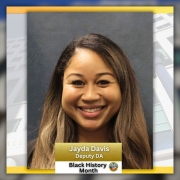
Meet Deputy DA Jayda Davis

In honor of Black History Month, which is celebrated throughout the month of February, the DA’s Office is featuring stories of employees and what inspired them to pursue a career in public service.

Meet Deputy District Attorney Jayda Davis, who has been working at the San Diego County District Attorney’s Office since 2023. She was born and raised in San Diego. Before joining the DA’s Office and before law school, she worked at Starbucks all throughout college at SDSU. After graduating from California Western School of Law, she worked at an estate planning law firm before law school. She is currently assigned to the Felony Trial Team in the Superior Court Division of the DA’s Office.

What inspired you to choose a career in law enforcement/at the DA’s Office?  

“Ever since I was a little girl, I wanted to be a lawyer. It was the first and only thing I wanted to be when I grew up! I had no idea why or what a lawyer did, but my grandma planted the idea in my head, and I truly ran with it. Once I got to college I knew I wanted to do criminal law, I just wasn’t sure what that looked like. I then did an internship with the DA’s office and a judge in South Bay granted the expungement of a rape conviction over our objection. It was my last day at my internship, and although I was outraged at the court’s ruling and had just ‘lost’ that motion, I knew I needed to come back to continue to work on cases and make sure victims voices were being heard.”

What is your favorite part of the job?  

“It is so hard to pick one thing, but I would have to say my favorite part of the job is working with victims. A lot of the time, we are the first person a victim hears from after reporting the crime to the police. Being able to introduce myself and provide them with information or connections with our victim advocate services is one of the most rewarding parts of this job.”

What does Black History Month mean to you, why is it important to you? 

“Black History Month is a time of honor, reflection, and growth. About 3.5% of lawyers in California are Black and about 2% of those lawyers are Black women. I was the first person in my family to go to college and law school. Growing up I didn’t know any lawyers, let alone any Black lawyers, and that is why representation is SO important. I look internally at our office and see so many excellent Black DDA’s that I aspire to be like. I just hope to follow in their footsteps and help continue to pave the way for other kids who like me at such a young age just had a dream of being here. Just a special thank you to one of my mentors in the office, Chief Samira Seidu. Thank you for always believing in me!”